
A Geographic Breakdown of Locum Tenens Opportunities
/A Geographical Breakdown of Locum Tenens Opportunities
When I first considered locum tenens there were three items that were important to me. They were the location of the position, the details of the position (hours, call, clinic set up, etc.) and the pay structure. They all worked together, meaning one item could directly impact the other two. Ideally, all three would be maximized, with each opportunity being a defined shift in a great area for good pay. I imagined finishing my shift around 4pm, heading right to the beach and knowing I was being nicely compensated for the high-quality care I provided that day, and, oh yeah, I had my nights and weekends free!
In reality, these ideal positions are available, depending on how you define what it takes for you to be happy. For me, life is about balance, I am willing to make sacrifices to ensure that I distribute my energy where I want to. Each specialty will define what the nature of the position entails. With a good degree of certainty, if you are an ER doctor, you are going to be required to cover a defined amount of shifts in a given week or month. Pediatrician? Plan on covering the clinic from 8am to 5pm Monday to Friday. When it comes to pay, there are industry averages for what each specialty makes. These can vary a great degree depending on demand and location, but in general, they fall within fairly predictable amounts. Assuming the specialty drives the nature of the job and the amount payed, the real question in play related to where I could practice. Are all the jobs in rural Arkansas (no offense to the razorbacks out there) or is there the ability to practice in desirable locations for long stretches or in consecutive order? Today’s post digs deep into the geographic variation of the locum tenens jobs available both in the United States and Internationally.
For ease of review, I broke down the specialties in medicine into four categories.
Very High Demand
Primary Care (Family Medicine, Pediatrics and Internal Medicine)
Hospitalists
Emergency Medicine
Anesthesiology
High Demand
Cardiology
Cardiothoracic Surgery
General Surgery
Infectious Diseases
Neurology
Neurosurgery
Obstetrics and Gynecology
Orthopedic Surgery
Psychiatry
Urology
Moderate Demand
Dermatology
Endocrinology
Hematology/ Oncology
Interventional Radiology
Otolaryngology
Physical Medicine and Rehabilitation
Radiology
Radiation Oncology
Rheumatology
Low Demand
Allergy
Gastroenterology
Nephrology
Ophthalmology
Pathology
These four categories allowed me to make reasonable determinations about geographic availability of all specialties. Are there outlier specialties? Of course, but within each quartile, there were similar statistics when it came to the number of jobs in highly desirable geographic areas, the diversity of locations, and total number of jobs available. For each category, I broke down the available opportunities within one of the specialties in the group as an example for the others. Information about locations and number of jobs was obtained by a thorough search of the internet for available positions posted within 30 days of my research. Full disclosure, there was considerable overlap in information on several sites and determining what job was unique and the date of each posting was not always possible. I researched each opportunity in an attempt to reduce duplicated and outdated job postings in my data.
Very High Demand
At first glance, those physicians practicing in the very high demand specialties are presented with a large amount of opportunities. Of all hospitals and medical practices looking for locum tenens positions in 2016, almost 50% were in the very high demand specialties of primary care, hospital medicine, emergency medicine and anesthesiology. With family practice, pediatrics and Internal Medicine coming in at number one, Emergency Medicine second, followed by Hospital Medicine and Anesthesiology. It should be noted that of the available jobs, Anesthesia saw the largest decline in the past 5-10 years while both Emergency Medicine and Hospitalist positions experiencing a near doubling in demand.
I used Emergency Medicine as my example for the Very High Demand group. At the time of my research, I was able to find approximately 250-300 unique locum tenens jobs for an ER doctor to evaluate. Considering the American Academy of Emergency Physicians lists the total number of practicing ER doctors at around 40,000, if in a given year 8% are doing locums, that would mean 3200 a year or 266 per month. Looks like the data checks out for total available jobs. Breaking these down by state, I found the following:
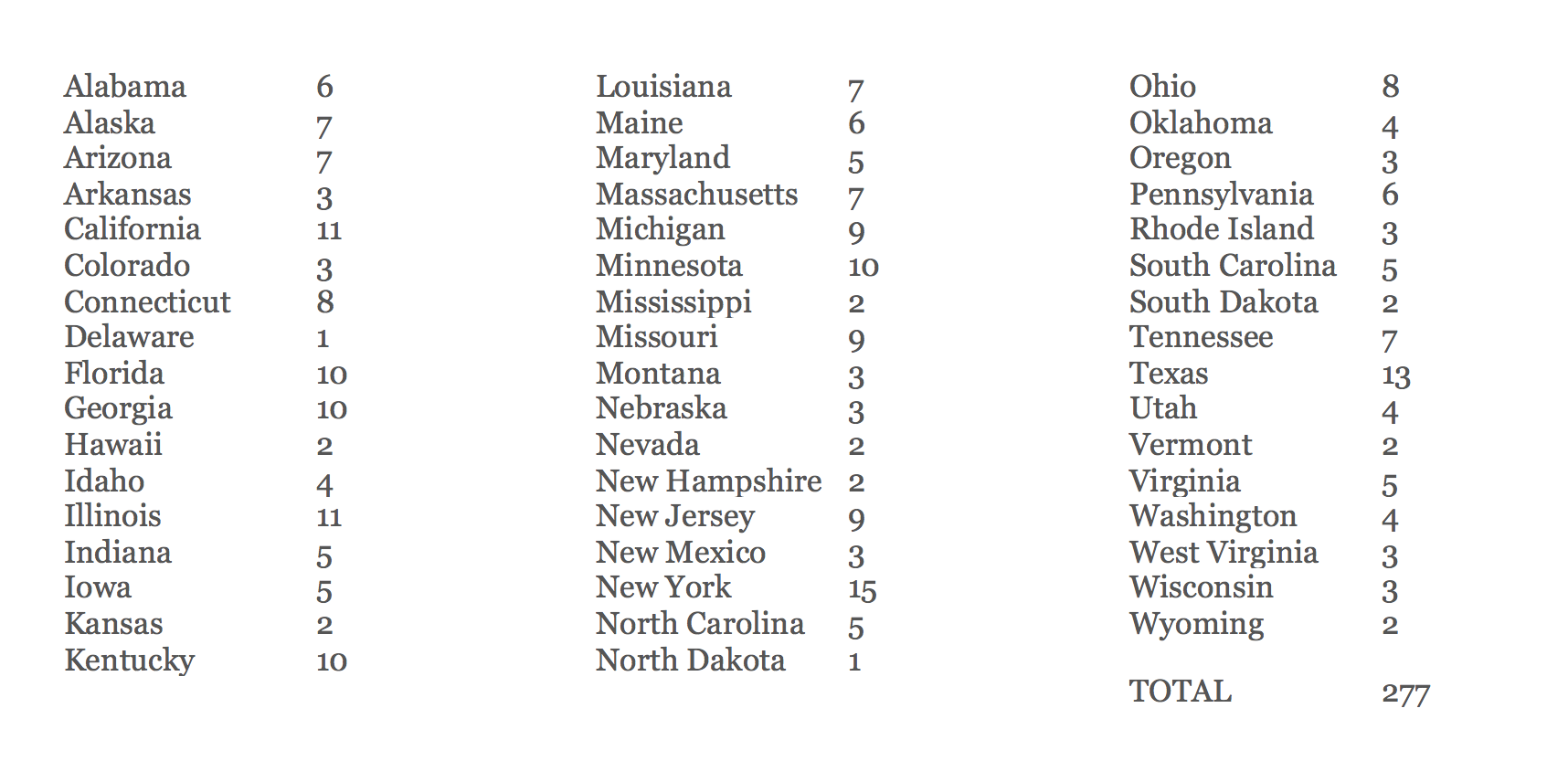
Looking at the geographic availability, there is at least 1 job in every state, including Hawaii and Alaska. At the low end of the availability, only 2 (4%) states, Delaware and North Dakota, are limited to a single position within the 30-day stretch I evaluated. 6 (12%) states had only 2 jobs open, 32 (64%) states had between 3-9 positions available, and 8 (16%) had 10 or more positions. The states with the most opportunities were Texas (13) and New York (15). Taken together, an emergency medicine physician looking to utilize locum tenens would be able to work in any state, and in most states, choose from several positions. Not bad! The next question is obvious, where in these states are the jobs. Let’s break down New York as our example.
In breaking down the 15 jobs available in New York state within the 30-day window I used, I was able to determine the regional location in 13 of 15 (86%) positions. Of the 13 positions, 6 (46%) were in New York City, including all 5 boroughs. Two of the other positions were found to be in western NY, Syracuse and suburban Rochester. Two were in upstate NY, both in the Albany area and the remaining 3 were in suburban New York City, but not in the main boroughs. Looking at a map, it does appear that locum tenens would allow you to choose the area of New York state you preferred as well as give you the diversity of selections you would hope for in New York City.
High Demand
Although the drop off from physicians practicing in the “very high” demand to “high” demand specialties is considerable, there are ample positions available and considerable variability in the locations. The large number of different specialties within this group equates to almost 30% of the total available positions, with Cardiology, Orthopedic Surgery, Neurology and Urology making up the largest of this group. Just as we did for Emergency Medicine, lets break down Urology for geographic availability.
According to the American Urological Association website, there are currently around 11,000 urologists actively practicing in the USA. The states with the largest population of doctors are New York, Florida, California and Texas. Interestingly, Urology represents a specialty most in need of doctors, with over 64% of counties in the USA not having a practicing doctor. When evaluating the current locum tenens opportunities, I was able to find around 60 total jobs during a 30-day block. The state breakdown was as follows.
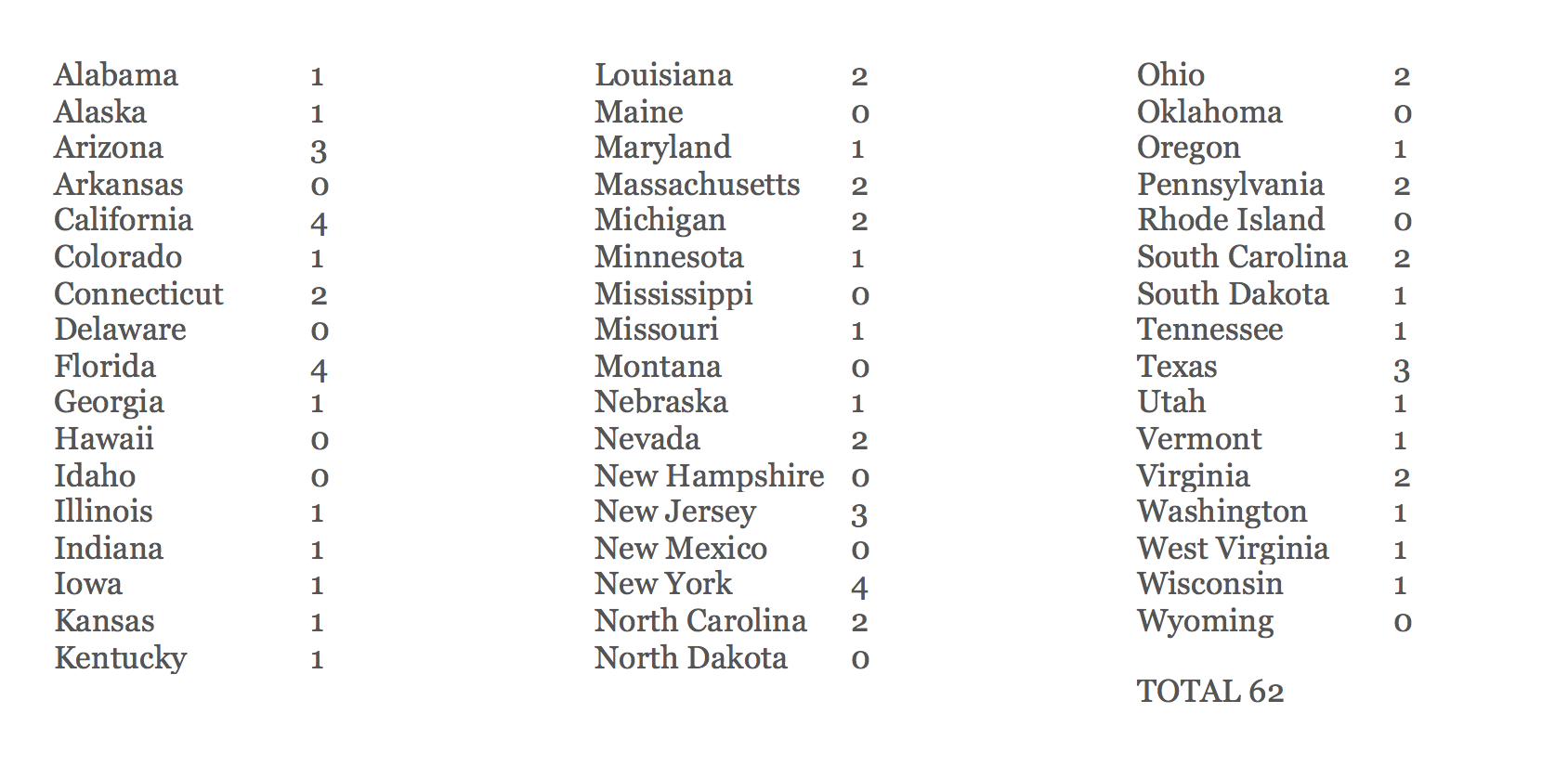
Although there were 62 total Urology jobs, 13 (26%) states did not have a single position available and 34 (68%) of states had between 1 and 3 positons open. The three states with the most opportunities were California, New York and Florida, all with 4 total positions. What we see is that there are definitely positions available and in some of the most sought-after states to live, but the variability of choices in each state decreases for this grouping of specialities.
When looking at a specific state, lets use California as our example. There were four total positions in California in the 30-day time frame I used to calculate my statistics. Luckily, these 4 jobs would provide a urologist with some variability in geographic location, albeit small. Two of the positions were in southern California, one directly inside and one just outside of Los Angeles. This would provide the ability to be in southern California and chose either the benefits of being in a major city versus the benefits of being in a suburban environment. Of the two remaining jobs, one was along the coast in central to northern California and one was north of San Francisco by about an hour. The glaring omission here is the ability for a practicing urologist to easily find a job directly in San Francisco, an often sought after area in the locum tenens world. All in all, for a relatively small specialty like Urology, there are a good amount of positions available, but nowhere near as plentiful as our colleagues in the ER.
Moderate Demand
Oncology and Radiology are pulling the most weight in the moderate demand group of specialties for locum tenens. However, the group made up an average of 15% of the total available positions with each specialty seeing a fair amount of opportunity in both number and geographic variability. The drop off here is not major, with a total of 30 Oncology jobs available, but it does begin to dramatically limit the locations available to practice.
Only 18 (36%) of states had available Oncology locum tenens positions at the time of my research. Of these 18, 15 (88%) had a single position with California representing the anomaly with 3 total jobs. Of these 3, all were outside a major city and all were in northern California. With the moderate demand group of specialties, we begin to see serious limitations in the geographic variability of positions, however, a creative physician could capitalize on the 30 total jobs in 18 states.
Low Demand
Less than 5% of the locum tenens positions fall to the low demand group of medical specialties. Unfortunately for this grouping, there are variabilities that decrease both the demand and interest in locum tenens work. The drop off is palpable and severe. An Allergist looking to use locum tenens would have to choose from only 4 total jobs in 4 states. If you are from Minnesota and looking to go back for a short rotation, you may be in luck, otherwise, it is going to take some creativity to make a long-term career out of locum tenens work.
We hope this post helps shine some light on what is really out there for physicians looking to start a career in locum tenens right out of residency or even transition out of practice. There are clearly huge opportunities if your specialty is in the high demand groups, with jobs in several different cities in almost all states. If you happen to fall into a lower demand group, the benefits of locum tenens work may still be there and utilizing some strategic planning may get you on the path to your goals!
~The Locums Life~
FAQ: Geographic Variations in Locum Tenens Assignments for Physicians
1) Why does geography matter so much in locum tenens work?
Geography is one of the biggest drivers of your locum tenens experience because location affects:
compensation and demand
scope of practice and autonomy
patient population and acuity
call burden and staffing support
licensing and credentialing speed
housing quality and travel logistics
taxes (state and sometimes local)
In other words: locum tenens isn’t “one job type.” It’s a spectrum, and geography shapes the entire assignment.
2) What are the biggest geographic factors that change a locums assignment?
The most important geographic variables are:
Rural vs urban setting
Regional physician supply/demand
State licensing complexity
Facility type (community vs academic)
Cost of living and housing availability
State income tax and multi-state tax issues
Climate, seasonality, and surge patterns
A “great locums job” in rural Montana will look very different than a “great locums job” in Manhattan.
3) Do rural locum tenens assignments usually pay more?
Often yes—because hard-to-staff areas pay for scarcity and inconvenience. Rural assignments may offer:
higher rates
more consistent hours
better negotiating leverage
longer blocks
But higher pay can come with:
higher autonomy (less backup)
broader scope
higher call burden
fewer specialists on-site
You’re often paid more because you’re needed more.
4) Are urban locum tenens assignments lower-paying?
Not always, but they can be more competitive. Urban assignments may pay less because:
there are more local physicians willing to work
quality-of-life is higher
hospitals have more staffing options
That said, urban assignments can still pay very well in high-demand specialties or during urgent shortages.
5) What about suburban assignments?
Suburban assignments can be a sweet spot:
more support and resources than rural
fewer administrative layers than major academic centers
often better housing options and family friendliness
moderate-to-strong compensation
Many physicians find suburban locums gives a good blend of comfort and income.
6) What’s the difference between locums in academic centers vs community hospitals?
Academic center locums often involve:
more protocols, committees, and rules
trainees (residents/fellows)
more subspecialty support
sometimes less autonomy
sometimes slower onboarding
Community hospital locums often involve:
more autonomy and faster decision-making
fewer trainees
potentially broader scope
more responsibility if specialists aren’t available
Neither is better—just different.
7) Which states have the most locum tenens demand?
Demand shifts with:
population growth
rural distribution
specialist shortages
hospital consolidation
seasonal tourism patterns
Historically, many high-demand markets include large rural states, fast-growth states, and states with healthcare access gaps. But the “best state” depends on your specialty. The smartest move is to ask recruiters for real-time demand in your specialty.
8) Do states with no income tax offer better locums take-home pay?
Potentially, yes—but it’s not that simple. States with no state income tax (often cited: Florida, Texas, Nevada, Washington, etc.) can increase net pay. But you must consider:
higher property costs or cost of living
higher competition in desirable areas
travel and housing costs
your home state tax rules (especially if you remain a resident elsewhere)
No state tax is a bonus, not the whole story.
9) If I work locums in multiple states, do I pay taxes in all of them?
Often yes. Many states tax income earned within their borders. So if you do assignments in three states, you may file:
a resident return in your home state
nonresident returns in each work state
This is one reason geographic variation has real financial consequences.
10) Are coastal assignments always better?
“Better” depends on your goal:
Coastal assignments can be more desirable, but sometimes more competitive and lower-paying.
Housing can be expensive and harder to secure.
Some coastal areas have large systems with more bureaucracy.
If your goal is lifestyle, coastal can be amazing. If your goal is income acceleration, rural or less desirable regions may win.
11) How does the local cost of living affect locums decisions?
Cost of living impacts:
whether the provided housing is comfortable
whether a stipend stretches far enough
whether travel costs eat your profit
Sometimes the highest hourly rate isn’t the best deal if housing is expensive or hard to secure. “Net after friction” is what matters.
12) What is “seasonality” in locum tenens geography?
Seasonality is huge. Some markets have predictable surges:
resort towns (ski season, summer beach season)
college towns (academic year changes)
flu season / winter surges
population shifts (snowbirds, retirees)
Seasonality can create high-paying opportunities—if you plan ahead.
13) Why do resort and tourist locations often need locums?
Tourist surges can overwhelm local healthcare capacity. Hospitals may staff up temporarily because:
patient volume spikes
local physicians can’t cover extra demand
full-time hiring doesn’t make sense for seasonal peaks
These assignments can be fun and lucrative—but housing can be tight.
14) How does geography affect scope of practice?
In rural areas, you may be asked to do more:
broader clinical responsibilities
less immediate specialist backup
more call or broader call
In urban/academic areas, scope can be narrower and more regulated:
more subspecialists available
more rules and protocols
more defined roles
Geography changes how “wide” your practice becomes.
15) Do rural assignments have less support?
Often yes, but not always. Many rural hospitals have excellent teams, but fewer layers:
fewer consultants
fewer trainees
fewer subspecialty services
This can be empowering or stressful depending on your comfort level and specialty.
16) How do I evaluate “support” in a new geographic location?
Ask:
Is there 24/7 radiology? anesthesia? ICU coverage?
How fast are transfers?
What specialists are on-site vs on-call?
Are there APPs?
Is there a hospitalist team?
What’s the nurse staffing ratio?
Support matters more than scenery.
17) How does geography affect call burden?
In less populated areas, call may be heavier because fewer physicians share it. In dense markets, call can be more distributed. But urgent needs can change this. Always clarify:
call frequency
call type (in-house vs beeper)
expected callback volume
compensation for call
18) What geographic locations are best for a physician doing locums with a family?
Family-friendly locums locations often have:
safe neighborhoods
good schools/parks
reliable housing inventory
reasonable commute
stable schedule
Suburban markets near mid-sized cities often provide the best balance.
19) Can I “test drive” a city using locum tenens?
Yes—this is one of the best uses of locums geography. Many physicians use assignments to:
explore relocation
evaluate school districts and neighborhoods
assess local medical culture
build connections before committing
A 2–3 month assignment can be a low-risk way to experience a place.
20) How do licensure and state rules vary geographically?
Licensure timelines vary widely by state. Some states are faster and more streamlined; others are slower with more paperwork. Some states have additional requirements (e.g., certain training verifications). Geography affects how quickly you can start and how many hoops you’ll jump through.
21) What is the best strategy for choosing states if I want to do locums long-term?
Common strategies:
build licenses in a “region cluster” (neighboring states)
focus on states with consistent demand in your specialty
maintain 2–4 active licenses so you can pivot quickly
This allows you to capture opportunities without waiting months.
22) How do I compare two assignments in different regions fairly?
Use a simple scorecard:
Net pay (after taxes, travel friction, housing quality)
Schedule stability (call, weekends, overtime)
Support level (consultants, ICU, backup)
Housing and commute
Facility culture (communication, staffing)
Your personal goal (income sprint vs lifestyle vs experience)
Geography isn’t just a backdrop—it changes the whole deal.
23) What are “hard-to-staff” geographic assignments?
Hard-to-staff usually means:
remote/rural
less desirable climate or limited amenities
high call burden
high acuity with limited backup
urgent start date
unstable staffing history
These often pay more and offer negotiation leverage.
24) Are “hard-to-staff” locations always bad?
No. Some physicians love them because:
autonomy is high
pay is strong
communities are appreciative
work can be meaningful
pace may be simpler than big systems
It depends on your personality and what you want from locums.
25) How does geography affect housing options?
Massively. In some locations, hotels are plentiful. In others:
limited safe hotels
expensive short-term rentals
scarce furnished housing (especially tourist areas)
long commutes if you want a nicer neighborhood
Housing can make or break a geographically “cool” assignment.
26) How do I avoid getting stuck with miserable housing in a great location?
Plan early:
ask to review housing options before booking
request extended-stay suites for long assignments
consider furnished rentals in longer assignments
negotiate stipend if housing inventory is limited
If housing is an afterthought, you’ll regret it.
27) How do geographic variations affect credentialing speed?
Some hospitals and regions have:
experienced credentialing systems (faster)
slower committee cycles (slower)
more rigid onboarding requirements (slower)
Also, different facilities have different paperwork standards. Always ask:
“What’s your typical credentialing timeline for locums in my specialty?”
28) What’s the biggest geographic “surprise” for new locums doctors?
The biggest surprise is how much the facility culture changes by region. Two assignments with the same pay can feel completely different based on:
staff communication norms
pace and patient expectations
administrative burden
local clinical practice patterns
Geography influences culture, and culture influences your daily happiness.
29) How can I use geography to increase locums income?
A common strategy:
take higher-paying rural/urgent assignments for a defined sprint
then take lifestyle assignments in desirable locations during recovery periods
build repeat relationships in a few regions for consistency
In other words: use geography as a lever, not a constraint.
“Geographic variation is one of the most important factors in locum tenens work for physicians. Rural locum tenens assignments often pay more due to physician shortages and higher call burden, while urban and academic locums may offer more support but can be more competitive and protocol-driven. State licensing timelines, taxes, housing availability, and seasonal demand all vary by location and can dramatically change the real value of an assignment. Physicians who succeed in locum tenens learn to compare jobs by net pay, schedule stability, support level, and lifestyle fit—not just by hourly rate.”